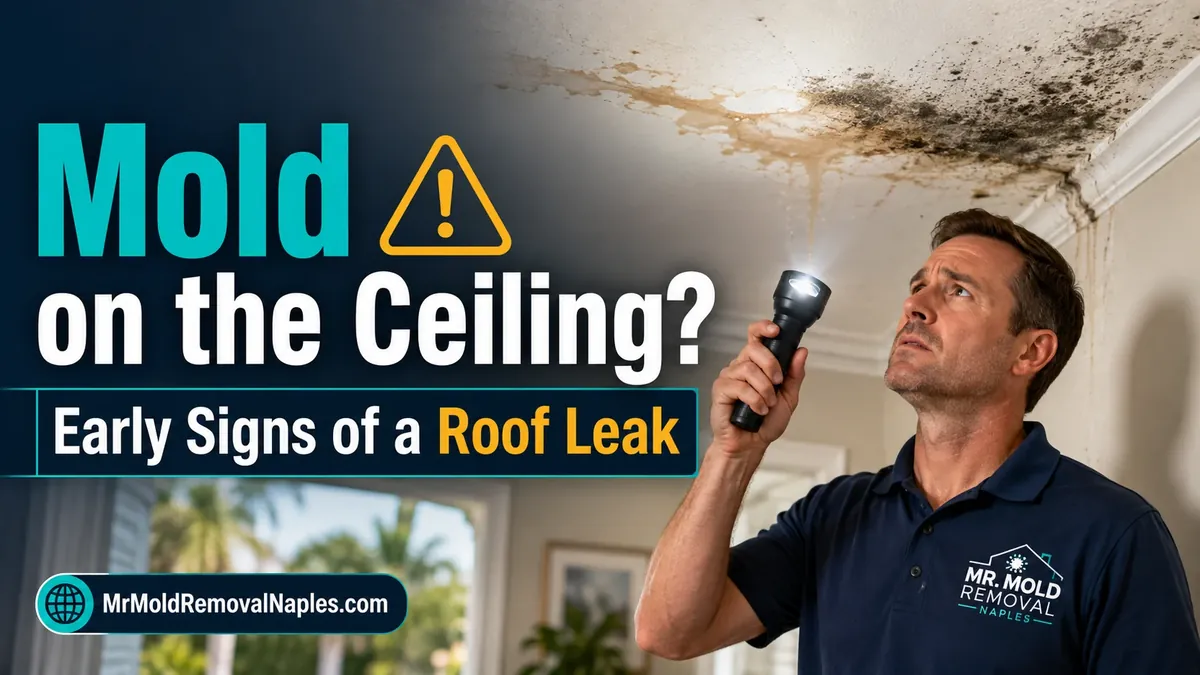
Mold on Ceiling From a Roof Leak: Early Signs and What to Do
You spot a small brown ring on the ceiling after last week's storm. It looks minor, so you plan to paint over it. In Naples, that small ring deserves a closer look before any paint.
Early stage mold on a ceiling from a roof leak can appear within days of the leak. Mold spreads fast once moisture is present, sometimes within 72 hours. Catching it early is the difference between a simple repair and a full ceiling replacement.
Quick Verdict: A water stain plus dark speckles means active mold is likely growing inside your ceiling. Do not paint over it. Find the leak, dry the area, and have the mold checked before it spreads further.
What Early Stage Ceiling Mold Looks Like
Early mold growth does not always look dramatic. On a ceiling, the first signs are usually small dark spots near a water stain, often black, brown, or greenish.
Common early signs include:
- A yellow or brown water ring that slowly grows wider.
- Tiny dark speckles clustered around the stain.
- A musty smell in the room, even when the stain is small.
- Peeling or bubbling paint near the stained area.
- A soft or sagging patch when you press gently on the ceiling.
A stain that stays dry and flat may be an old leak that already dried. A stain that keeps growing, feels soft, or smells musty points to active moisture and active mold.
Why a Roof Leak in Naples Turns Into Mold Fast
Naples has a humid subtropical climate with an average relative humidity around 78%. That moisture hangs in the air and keeps wet materials damp far longer than in drier states.
Hurricane season runs from June through November. Storms like Ian in 2022 and Helene and Milton in 2024 pushed water through roofs across Collier County. Even a small leak can feed mold growth for weeks before a homeowner notices.
Mold needs only three things: moisture, organic material, and warmth. Your ceiling drywall and wood framing provide the organic material. Naples provides the warmth and humidity. A roof leak provides the moisture. That is why early action matters here.
Is Ceiling Mold From a Roof Leak Dangerous?
Any mold growth in a living space can be a problem. Exposure can trigger sinus congestion, chronic coughing, headaches, fatigue, brain fog, skin irritation, and asthma flare-ups. People with allergies, asthma, or weakened immune systems are often more sensitive.
Mold that looks dark is not automatically the toxic type. Stachybotrys chartarum, the species people call black mold, produces mycotoxins, but not every dark mold is Stachybotrys. Color alone does not tell you the risk.
If anyone in the home has breathing problems or allergy symptoms that improve away from the house, take ceiling mold seriously. Do not disturb a large patch. Scrubbing it dry can send spores into the air.
Step One: Find and Stop the Leak First
Mold cleanup fails when the water keeps coming. Before treating any growth, find the source of the leak. Check the roof above the stain, around vents, chimneys, and flashing.
In Naples, storm-driven rain can push water under shingles or through compromised seals. A quick roof check after a storm catches many leaks early. If you cannot find the source, a professional can trace the moisture path.
Once the leak stops, dry the area completely. Run fans and a dehumidifier, and open windows when outdoor humidity allows. In Naples, indoor humidity control often means running the air conditioner, which pulls moisture from the air.
DIY Limits for Ceiling Mold
Small surface spots on a smooth, non-porous ceiling can often be cleaned with soap or detergent and water, following EPA guidance for routine household mold. Dry the area fully afterward.
There are clear limits to DIY. Call a professional when:
- The mold patch is larger than a few square feet.
- The ceiling is drywall, wood, or insulation, where mold roots grow inside.
- The stain keeps returning after cleaning.
- You smell a persistent musty odor.
- The leak involved storm or flood water.
Never paint over mold. Paint seals the surface but leaves the colony alive inside the ceiling, where it can keep spreading.
What Professional Ceiling Mold Removal Involves
Professional remediation follows IICRC S520 standards. The process protects your home while removing the growth:
- Containment barriers keep spores from moving into clean rooms.
- Negative air pressure pulls contaminated air out of the work area.
- HEPA scrubbers capture particles down to 99.97% at 0.3 microns.
- Antimicrobial treatment addresses remaining surface growth.
- Porous material removal takes out mold-damaged drywall and insulation.
- Clearance testing confirms the space is clean before you rebuild.
Remediation teams in Florida hold state mold licenses through DBPR. Ask about licensing and insurance before any work begins.
Will Homeowners Insurance Cover It?
Florida policies typically cover sudden and accidental water damage, including a roof leak caused by a storm. They usually do not cover long-term humidity, deferred maintenance, or a leak that went unrepaired for months.
Standard policy limits for mold often run $1,000 to $10,000. Endorsements can raise coverage to $25,000 or $50,000. Check your policy and call your carrier early, because documentation matters.
Take photos of the stain, keep receipts, and note when you first saw the leak. An inspection report can support your claim with lab results.
What Ceiling Mold Remediation Costs in Naples
Cost depends on how far the mold spread and how much material must be removed.
| Project | Verified cost range |
|---|---|
| Small bathroom | $800 to $1,500 |
| Bedroom ceiling or roof leak area | $1,500 to $2,500 |
| Kitchen or larger drywall sections | $2,000 to $3,500 |
| Whole home or attic | $4,000 to $8,000+ |
Most residential projects land between $1,500 and $5,000. An inspection costs $300 to $1,000, averaging near $600, with extra lab tests at $75 to $100 per sample. See the Naples mold remediation cost guide for more detail.
Act Fast After a Naples Roof Leak
Mold can spread within 72 hours of moisture intrusion. That short window is your best chance to keep a roof leak small.
Check ceilings after every heavy storm, especially during hurricane season. A fast response protects your health, your ceiling, and your wallet. If you see mold or smell mustiness, do not wait for the stain to grow.
For mold already inside drywall or insulation, professional mold removal and remediation in Naples removes the damaged material and treats the area properly. If the leak is active or the stain appeared after a storm, emergency mold removal can respond before the growth spreads further.
Frequently Asked Questions
Early stage mold on a ceiling usually appears as small dark speckles near a water stain, often with a yellow or brown ring, bubbling paint, or a faint musty smell. The patch can grow quickly once moisture is present.
A flat, dry stain that has not changed size is likely an old leak. A stain that keeps growing, feels soft to the touch, or smells musty points to active moisture and active mold. If the area is damp or the patch is spreading, treat it as active.
Only small surface spots on a smooth ceiling may suit DIY cleaning with soap or detergent and water. Ceiling drywall and wood are porous, so mold roots can grow inside where surface cleaners cannot reach. Larger patches and mold inside porous materials need professional removal.
Mold exposure can trigger sinus congestion, coughing, headaches, fatigue, and asthma flare-ups, especially in sensitive people. Dark mold is not always the toxic type, but color alone does not tell you the risk. Do not disturb a large patch, since that can release spores into the air.
Florida policies usually cover sudden water damage like a storm-caused roof leak. Long-term humidity or unrepaired leaks are typically excluded. Mold limits often run $1,000 to $10,000, and endorsements can raise that to $25,000 or $50,000. Document everything and contact your carrier early.
A bedroom ceiling or roof leak area typically runs $1,500 to $2,500. Most residential projects fall between $1,500 and $5,000. An inspection averages near $600, with lab tests at $75 to $100 per sample.
Mold can spread within 72 hours of moisture intrusion. In humid Naples, wet drywall and wood stay damp longer, which speeds growth. Checking ceilings after every storm and drying leaks quickly is the best way to stop mold before it spreads.