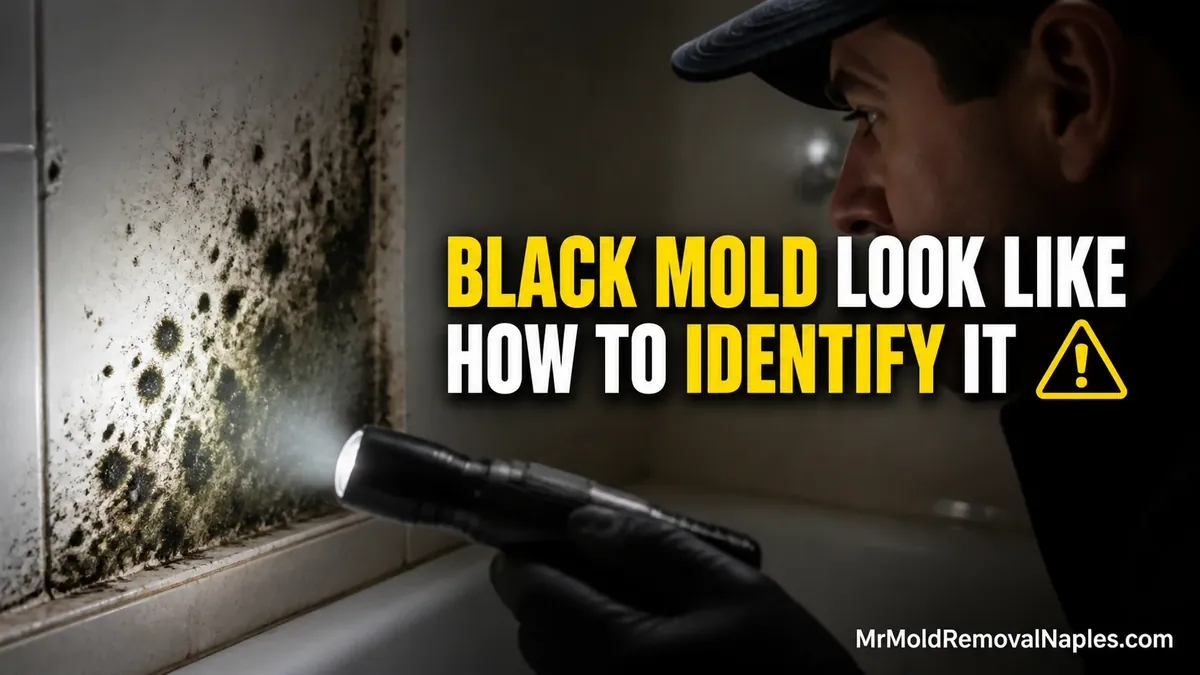
What Does Black Mold Look Like? Identification Guide, Lookalikes, and Next Steps
You walk into your bathroom, flip on the light, and see a dark patch spreading across the drywall near the shower. It's black. It's ugly. Your first thought: Is that black mold?
Here's the quick answer: black mold usually appears as dark greenish-black or black patches with a slimy, fuzzy, or powdery texture in damp areas. But you cannot confirm "toxic black mold" by sight alone.
The good news: most dark spots are not emergencies. In Naples and throughout Collier County, Florida, our humid subtropical climate means mold growth is common. That doesn't automatically mean it's dangerous. This guide will show you exactly what to look for, what to rule out, and when to call a professional.
| Type | Color | Texture | Common Locations | Health Risk | Cleanup |
|---|---|---|---|---|---|
| Stachybotrys chartarum | Dark greenish-black or black | Slimy when wet; powdery when dry | Moist drywall, wood, paper in water-damaged areas | May trigger allergy/asthma symptoms | Professional recommended |
| Cladosporium | Black, brown, olive, or green | Suede-like, powdery, small spots | Bathrooms, fabrics, carpets | Allergy symptoms | Detergent scrub |
| Aspergillus | Green, yellow, brown, or black | Powdery or fluffy | HVAC, insulation, dust | Allergies; higher risk if immunocompromised | Depends on location |
| Mildew | White, gray, or yellow | Flat, powdery | Damp surfaces | Minor irritation | Detergent and water |
| Soot or dirt | Black | Greasy, smudgy, not fuzzy | Near candles, vents, ducts | None | Cleaner or degreaser |
What Does Black Mold Look Like?
A complete black mold look like guide covers three things together: color, texture, and pattern. None alone is enough to identify it.
Color: Black Mold Is Rarely Pure Black
Stachybotrys chartarum is typically dark greenish-black. True pure black is less common. You may see dark olive tones, deep gray, or near-black patches that shift color as they dry out.
Texture: Slimy vs. Fuzzy vs. Powdery
Active, wet black mold usually looks slimy or wet-looking. When it dries out, it becomes powdery and may crack. Some molds look fuzzy or velvety. Texture changes based on how long the moisture has been present.
Pattern: Irregular Patches, Not Perfect Circles
Black mold grows in irregular, spreading patches. It follows moisture paths, so you'll see it branching along drywall seams, dripping down from ceiling leaks, or spreading outward from a corner. It does not grow in neat, predictable shapes.
Black Mold vs. Mildew: 3 Ways to Tell Them Apart
Mildew is the most common lookalike. Naples homeowners see it constantly because of our average relative humidity hovering around 78%. Here's how to separate them.
Texture
Mildew is flat and powdery. Black mold is usually raised, fuzzy, or slimy. If you can wipe it off a tile surface easily with a damp cloth, it's likely mildew.
Color
Mildew starts white or gray and may yellow with age. Black mold is consistently dark greenish-black or black. If the spot is light-colored, mold is less likely.
Location
Mildew sits on surfaces. Black mold soaks into porous materials like drywall, wood, and paper. It cannot be wiped away because it grows through the material, not just on it.
What Else Looks Like Black Mold? Lookalikes You Must Rule Out
Soot and Dirt
Near candles, fireplaces, or HVAC vents, soot deposits look black and alarming. But soot is greasy and smudgy, not fuzzy. It won't have that musty smell. A damp cloth and degreaser handles soot.
Cladosporium: The "Harmless Black Mold" People Usually See
Cladosporium is one of the most common indoor molds in Florida homes. It can appear black, brown, olive, or green with a suede-like or powdery texture. It can cause allergy symptoms but is generally lower-risk than Stachybotrys. Most people who think they see black mold are actually looking at Cladosporium.
Aspergillus: Common in HVAC and Dust
Aspergillus can appear green, yellow, or black depending on the species. It's often found in HVAC systems and insulation. It poses higher risk to people with weakened immune systems. If you suspect mold in your ducts, read about HVAC and air duct mold before assuming it's harmless.
Old Water Stains
A past roof or plumbing leak can leave dark brown or black staining on drywall or ceilings that looks like mold. If the moisture source was fixed and the area is fully dry, it may be a stain. But always confirm the moisture is gone before assuming it's safe.
Why Visual ID Fails
Many mold genera look identical to the naked eye. Color and texture overlap between dozens of species. You cannot confirm Stachybotrys chartarum by looking at it. This is the single most important fact missing from most mold scare articles.
Where Does Black Mold Grow?
In Collier County, mold problems spike after hurricane season (June through November) and during the wet season when humidity is relentless.
- Bathrooms: Around tub caulk, behind toilets, under sinks, and on drywall near showers.
- Behind drywall: After roof leaks, plumbing leaks, or flooding. You may smell it before you see it.
- Under sinks and around windows: Slow drips and condensation create perfect conditions.
- High-cellulose materials: Drywall, wood framing, paper backing on insulation, cardboard boxes.
What surfaces do not support black mold growth? Tile, glass, and metal. However, the grout between tiles and the caulk around fixtures absolutely can. Mildew loves those surfaces too.
Mold can begin growing within 24 to 48 hours after a moisture event. After major storms, that window matters. If you had flooding, check out our emergency mold removal page for next steps.
Can You Identify Black Mold by Sight Alone?
No. This is the answer most mold companies don't want to say, but it's the honest one.
Why Visual ID Is Unreliable
Dozens of mold species share the same dark color and fuzzy texture. Even trained inspectors do not identify species by sight. Lab testing is the only way to confirm Stachybotrys chartarum.
What a Professional Mold Inspection Adds
A certified inspector uses moisture meters, thermal imaging, and air sampling to find mold you cannot see and identify the moisture source driving it. A professional mold inspection and testing in Naples typically runs $300 to $1,000, averaging around $600, plus $75 to $100 per lab sample.
Frequently Asked Questions
Exposure to damp or moldy environments can cause nasal congestion, throat irritation, coughing, wheezing, eye irritation, and skin irritation, according to the EPA and CDC.
People with asthma, allergies, or weakened immune systems are more sensitive. Children, the elderly, and pregnant women should be more cautious about prolonged exposure. Pay attention to symptoms first, fix the moisture source second.
The term "toxic black mold" is a media term, not a medical diagnosis. Some molds can produce mycotoxins, but serious systemic illness from typical household mold exposure is rare and not broadly proven. Do not panic over a dark spot. Do take moisture problems seriously.
Cleaning mold without stopping the water source is pointless. It will return within days. Find the leak, fix the drip, or improve ventilation before you touch the mold.
Basic protection keeps mold spores out of your lungs and eyes. Do not skip this step, especially if you have allergies or asthma.
Scrub hard, non-porous surfaces like tile or tubs with detergent and water. This is the EPA-recommended method. Rinse and dry thoroughly.
Drywall, carpet, ceiling tiles, and cardboard with mold growth should be bagged and discarded. You cannot clean mold out of porous materials effectively.
Use fans, dehumidifiers, or open windows. The goal is to eliminate moisture completely so mold cannot regrow.
Check the area weekly for the next month. Regrowth means the moisture source was not fully resolved.