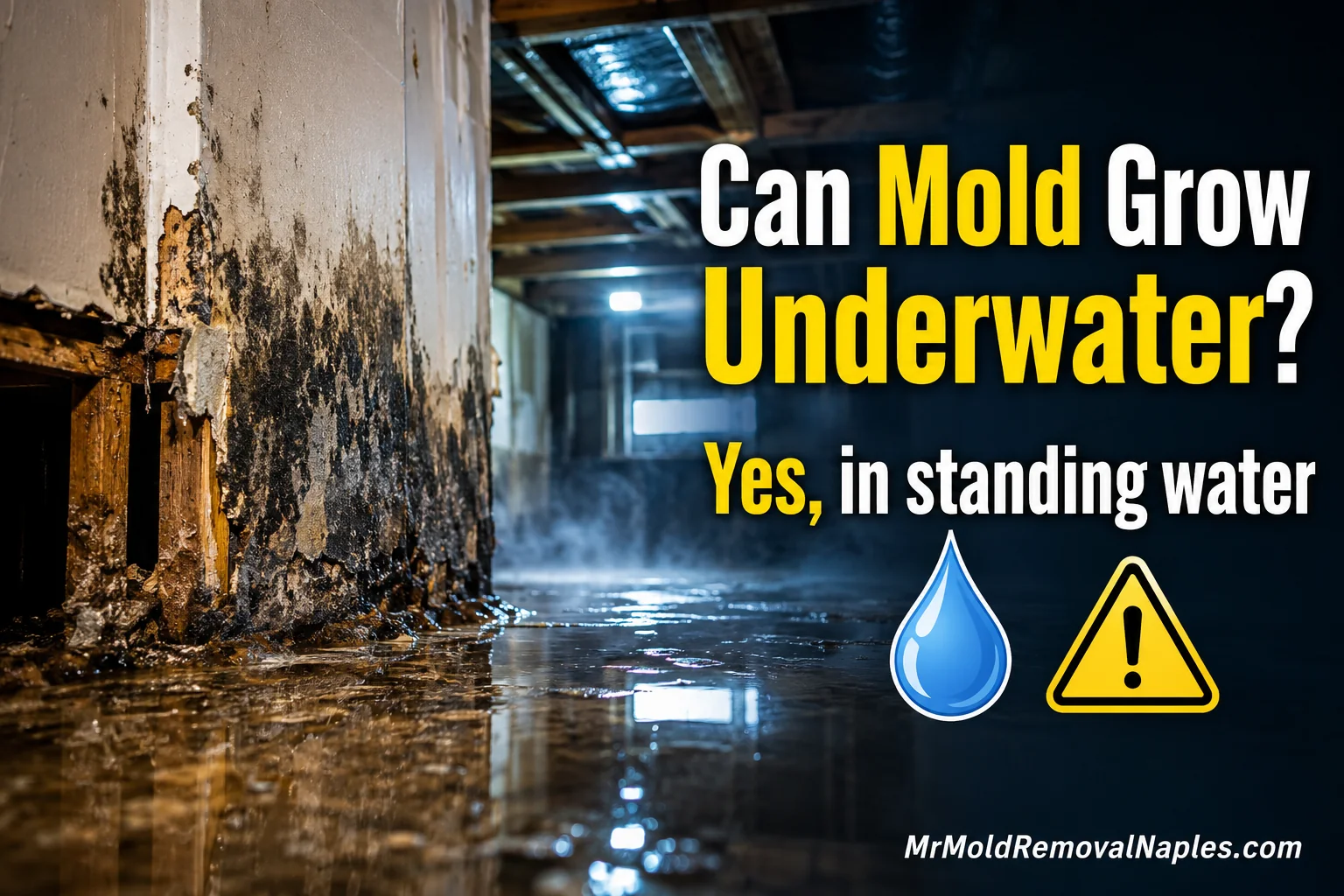
Can Mold Grow Underwater? Yes, in Any Standing Water
You came back to your Naples home after a week away and found an inch of water sitting in the laundry room. Maybe a pipe gave out, maybe the AC overflowed while the house sat closed. Now you are wondering whether the mold you have heard so much about can actually grow in that water.
Yes, mold can grow in standing water, and it grows fast. Mold does not need a dry surface to start. It grows on anything the water soaks, along the waterline, and on walls and floors that stay wet. The longer water sits indoors, the more certain mold growth becomes.
Quick Verdict: Standing water in a home is a mold emergency, not a wait-and-see situation. Dry the area within 24 to 48 hours, remove soaked porous materials, and call a professional if the water sat for days. Mold spreads fast, and in Naples the humidity does the rest.
What Growing Underwater Really Means
The honest answer is more useful than the simple one. Mold needs moisture, food, and oxygen to grow. Most molds need oxygen, so they rarely grow deep in the middle of a puddle. Instead, they grow on the surfaces the water touches: the waterline on a wall, the underside of soaked baseboard, the face of wet drywall, and the wood under a flooded floor.
Think of it this way. Standing water turns every wet surface into a food source. Drywall, carpet, padding, wood studs, and cardboard boxes all feed mold once they stay wet. Even if the mold is not floating visibly in the water, it is growing right at the edge of it, and it spreads to the rest of the soaked material within days.
| Where water sits | Does mold grow? | Why |
|---|---|---|
| Waterline on walls and baseboards | Yes | Wet surface with oxygen and food |
| Soaked drywall and carpet | Yes | Porous materials hold water and feed mold |
| Wood floors and framing | Yes | Moisture soaks in and stays for weeks |
| Deep in a puddle of clear water | Rarely | Little oxygen and no food source |
| Inside a flowing water pipe | Almost never | Water moves and never sits still |
Why Standing Water Is a Bigger Deal in Naples
Naples does not give wet homes a break. Average humidity runs around 78 percent and peaks near 97 percent according to the National Weather Service, so anything that gets wet stays wet longer here than it would in a dry climate.
Add hurricane season from June to November, a high water table, and the snowbird pattern of homes sitting closed from May to October, and you have a recipe for hidden water. Mold can spread within 72 hours of moisture intrusion. A small leak discovered late can become a whole-room problem before most homeowners even notice a smell.
That timing matters. If you have water inside after a storm, a broken pipe, or an AC failure, the clock starts the moment the water touches drywall, not when you get around to looking at it.
Where Mold Hides After Water Sits
Mold from standing water is rarely limited to what you can see. It spreads into places that look dry on the outside:
- Behind baseboards and door frames. Water wicks up behind them and mold grows where you cannot wipe it.
- Inside wall cavities. Wet insulation and drywall backing stay damp for weeks and grow mold out of sight.
- Under flooring. Carpet padding and wood subfloors absorb water and rarely dry on their own.
- In AC and condensate systems. Overflow pans and drain lines hold warm, still water that grows mold and then blows spores through the house.
- In closets and storage. Boxes, shoes, and clothes soak up water and become hidden mold colonies.
If any of these areas got wet, a professional mold inspection is the reliable way to find out how far the growth goes. Inspectors use moisture meters and can take lab samples that run $75 to $100 per sample at a third-party accredited lab.
The Right Order: Dry, Remove, Then Assess
When you find standing water, the sequence decides whether you end up with a smell and a stain or a full remediation job. Here is the order professionals follow:
- Stop the water source. Shut off the valve, fix the leak, or clear the clogged drain first. New water means the clock keeps resetting.
- Remove the standing water. Pumps, wet vacuums, and mops get the bulk of it out. Move anything that can be saved to a dry area.
- Dry everything within 24 to 48 hours. Fans, dehumidifiers, and open access to wall cavities speed drying. In Naples humidity, professional drying equipment is often the difference between saving a room and losing it.
- Remove soaked porous materials. Drywall, carpet, padding, and insulation that stayed wet are usually cut out and replaced because mold grows inside them.
- Treat and clean the rest. Hard surfaces are cleaned and treated, then the space is dried again before anything is rebuilt.
For serious water events, an emergency mold response team can start the drying and containment the same day. Remediation crews follow the IICRC S520 standard, using containment barriers, negative air pressure, and HEPA scrubbers rated at 99.97 percent efficiency at 0.3 microns so spores do not travel to the rest of the house.
What It Costs to Fix After Standing Water in Naples
Cost depends on how long the water sat and how much material it soaked. Most residential mold projects in Naples run $1,500 to $5,000.
| Project | Verified Naples cost range |
|---|---|
| Small bathroom or laundry room | $800 to $1,500 |
| Bedroom ceiling or wall from a leak | $1,500 to $2,500 |
| Kitchen cabinets and drywall | $2,000 to $3,500 |
| Whole home or attic after flooding | $4,000 to $8,000+ |
| HVAC or duct contamination | $350 to $1,500 |
An inspection before remediation costs $300 to $1,000, with an average near $600. For the full breakdown, see our Naples mold remediation cost guide.
Florida homeowners insurance typically covers sudden, accidental water events like a burst pipe, but long-term humidity and deferred maintenance usually are not covered. Policy caps commonly range from $1,000 to $10,000, and endorsements can raise the limit to $25,000 or $50,000. Check your policy before work begins.
The Bottom Line on Mold and Standing Water
Mold does grow in standing water, not as floating specks but on every surface that water soaks. Dry wet areas within 24 to 48 hours and remove anything porous that stayed wet. That single habit prevents most of the mold problems Naples homeowners face after leaks and storms.
If water sat in your home for more than a day or two, do not guess whether mold is growing behind the walls. A mold removal and remediation team can find the growth, remove it safely, and tell you exactly what it will take to make the space clean again.
Frequently Asked Questions
Yes. Mold grows on any surface that stays wet, including surfaces sitting under standing water. It grows along the waterline, on soaked drywall and wood, and on anything the water touched. Most molds need oxygen, so growth usually starts at the surface and waterline rather than deep in the water, but the wetter a material stays, the faster mold moves in.
Mold can start growing within 24 to 48 hours on wet materials, and mold spreads quickly once it takes hold. That is why water damage experts say a wet home needs to be dried out fast. In Naples, where humidity is high most of the year, soaked drywall, carpet, and wood can show visible mold in just a few days if the water sits.
Mold rarely grows inside pipes with constantly flowing water because the water keeps moving. It can grow in places where water sits warm and still, like a water heater tank, a dehumidifier tray, a condensate drain pan, or a toilet tank. The bigger indoor problem is standing water on floors and walls after a leak or flood, because it soaks materials mold feeds on.
No. Drying stops active growth, but mold spores survive and go dormant. When moisture returns, the mold starts growing again. That is why drying a flooded area is only the first step. Soaked porous materials like drywall and carpet usually need to be removed, because mold can live inside them and reappear later.
Remove the water and dry the area within 24 to 48 hours, then throw out soaked porous materials such as drywall, carpet, and padding. Small areas on hard surfaces can be cleaned, but floodwater that sat for days usually needs professional help. A licensed remediation contractor follows the IICRC S520 standard with containment barriers, negative air pressure, and HEPA scrubbers rated at 99.97 percent efficiency at 0.3 microns to keep spores from spreading.
Any mold in a flooded home should be treated carefully, and dark mold is often the kind people worry about most. Stachybotrys chartarum, commonly called black mold, can produce mycotoxins, though not every dark mold is Stachybotrys. Exposure can trigger sinus congestion, coughing, headaches, fatigue, and asthma flare-ups. If water has sat indoors for more than a day or two, treat the area as a mold problem and get it assessed.
Florida policies typically cover sudden, accidental water events like a burst pipe or an appliance overflow, but long-term humidity and deferred maintenance usually are not covered. Mold coverage caps commonly range from $1,000 to $10,000, and endorsements can raise the limit to $25,000 or $50,000. Read your policy and talk to your agent before remediation starts, and keep every receipt and photo.