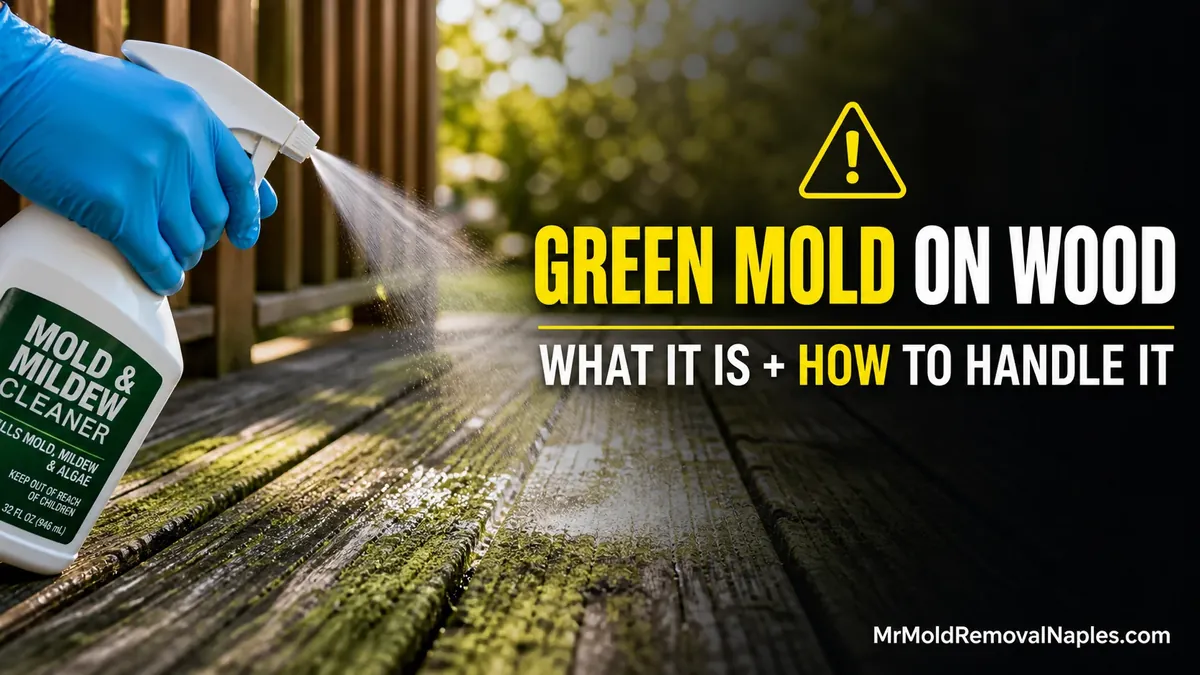
Green Mold on Wood: Is It Toxic + How to Remove It Safely (2026 Guide)
You push the dresser back to reach an outlet and freeze. The entire bottom edge of the wood frame is speckled with fuzzy green spots, and the corner of the wall behind it is cool and damp. Your brain runs one loop: Is this dangerous? Can I just scrub it off?
Here is the short answer: yes, you can usually remove green mold from wood yourself -- but only if the patch is small, the wood is sealed, and you fix the moisture problem first. If the wood is raw, particleboard, or the mold keeps coming back, no amount of scrubbing will save it.
In Naples and across Collier County, our humid subtropical climate (average relative humidity around 78%) means green mold on wood is one of the most common calls we get -- especially after hurricane season runs June through November. Here is everything you need to decide your next move.
| Method | Approx. Cost | Best For | Safe on Wood? |
|---|---|---|---|
| Detergent + water scrub | $2-$5 | Sealed wood, small patches | Yes |
| White vinegar (undiluted) | $3-$4/gal | Sealed or lightly finished wood | Yes (can dull finish) |
| Hydrogen peroxide 3% | $2-$4/bottle | Sealed and semi-sealed wood | Yes |
| Diluted bleach (1:3) | $3-$5 | Non-porous surfaces only -- not wood | No -- damages wood fibers |
| Professional remediation | $500-$6,000+ | Large areas, structural wood | Minimal risk when done right |
What Is Green Mold on Wood?
Green mold on wood is not a single species -- it is a color catch-all. The green you see is almost always spores from the genera Penicillium, Aspergillus, or Cladosporium. Color alone tells you very little about danger level.
Wood is a perfect host. Cellulose is mold's favorite food source, and any moisture -- a slow pipe leak, condensation from a Naples summer storm, a humidifier left too close -- gives spores everything they need to anchor in.
- Penicillium: Blue-green, powdery. Common on damp furniture and baseboards. Can trigger allergic reactions.
- Aspergillus: Green-yellow. Very common indoors. In immunocompromised people, some species can cause a lung infection called aspergillosis.
- Cladosporium: Dark green to near-black. One of the most common indoor and outdoor molds. Grows readily on wood and fabrics.
The key takeaway: green mold is a symptom of a moisture problem, not a disease of the wood itself. Fix the moisture, and the mold loses its reason to exist.
Is Green Mold on Wood Toxic or Dangerous?
Most green molds are not "toxic mold" the way Stachybotrys (black mold) is, but they can still cause real health symptoms -- especially for people with allergies, asthma, or weakened immune systems.
| Mold Type | Typical Color | Common Health Effect | Severe Risk? |
|---|---|---|---|
| Penicillium | Blue-green | Allergic reactions, sinus irritation | Rare; mycotoxin risk in some species |
| Aspergillus | Green-yellow | Respiratory irritation | Aspergillosis risk if immunocompromised |
| Cladosporium | Dark green/black | Allergies, asthma flare-ups | Rare |
| Stachybotrys | Greenish-black | Same allergy symptoms + more | Associated with chronic moisture damage |
The CDC confirms mold can cause nasal stuffiness, throat irritation, coughing or wheezing, eye irritation, and in some cases skin irritation. People with allergies or asthma may have more severe reactions. Those with chronic lung disease or weakened immune systems face higher risk.
If the mold is on a crib, changing table, or children's toy box, be conservative. A child's immune system is still developing. Replacement is often smarter than cleaning. Do not take chances you do not have to take.
If you need a professional assessment first, a mold inspection in Naples typically runs $300-$1,000 (average around $600) and gives you a clear picture before you touch anything.
Can You Clean Green Mold Off Wood Yourself?
Yes -- if the area is under 10 square feet, the wood is sealed, and you gear up properly. Here is the complete workflow that most articles skip half of:
- Step 1 -- Test the size: Under 10 sq ft is generally DIY territory (EPA guidance). Larger than that, call a professional.
- Step 2 -- Protect yourself: N95 respirator (filters 95% of airborne particles including mold spores), nitrile gloves, safety goggles. Open windows for ventilation. This is non-negotiable.
- Step 3 -- Dry the area first: Use a fan or dehumidifier. Most people scrub wet mold directly into the wood grain. Do not do this.
- Step 4 -- Scrub with detergent and water: The EPA's baseline method. Scrub the surface thoroughly.
- Step 5 -- Disinfect with vinegar or hydrogen peroxide: Spray undiluted white vinegar or 3% hydrogen peroxide. Wait 10-15 minutes. Do not rinse immediately.
- Step 6 -- Dry completely again: Allow 24-48 hours. Moisture left behind invites the mold straight back.
- Step 7 -- Sand if needed: For unsealed wood with deep staining, light sanding removes embedded mold. Wear your N95 while sanding.
- Step 8 -- Seal the wood: Apply primer, polyurethane, or shellac. A bare wood surface is a welcome mat for the next spore that lands on it.
- Step 9 -- Fix the moisture source: Leak, condensation point, poor airflow -- find it and fix it. Everything else is just cosmetic.
- Step 10 -- Monitor for two weeks: If the mold returns, the wood is colonized from the inside. Stop DIY. Discard or call a professional.
Vinegar, Bleach, or Hydrogen Peroxide -- Which Actually Works on Wood?
Use vinegar or hydrogen peroxide. Skip the bleach. Bleach is the most repeated mistake on the internet for wooden surfaces.
| Ingredient | Kills Mold? | Safe on Wood? | Notes |
|---|---|---|---|
| White vinegar (undiluted) | Yes, many species | Yes -- can dull finish | Best all-around household option |
| Hydrogen peroxide 3% | Yes | Yes -- test a small spot first | Antifungal, no toxic fumes |
| Bleach (1:3 dilution) | Surface only | No | Degrades wood fibers; spores survive deeper in the grain |
Here is why bleach fails on wood: bleach is water-based, and wood is porous. The chlorine reacts at the surface while the water carries spores deeper into the grain. You bleach the color out, but you do not kill the mold colony. The EPA does not recommend bleach as a routine mold cleanup practice for this reason.
When to Throw It Out Instead of Cleaning It
Some wood is not worth saving. Discard the piece when you see any of the following:
- The material is particleboard or MDF -- engineered wood is irreversibly colonized once mold penetrates the fibers.
- The wood is visibly swollen, soft, or crumbling.
- It still smells musty after a thorough cleaning and drying.
- The mold returned after a proper DIY clean.
- The piece has no sentimental or dollar value -- replacement is often cheaper than either cleaning or professional help.
For structural wood (wall studs, floor joists, roof framing), do not attempt DIY removal. That is a job for certified remediation professionals. If you are in Naples and suspect structural mold after a hurricane or roof leak, emergency mold removal is the right first call -- mold spreads within 72 hours of moisture exposure.
How Much Does Professional Mold Remediation Cost?
Professional remediation is the right call for large wood surfaces, structural contamination, or any situation where a high-risk occupant is involved. Costs in Collier County generally fall between $500 and $6,000+ for residential projects, depending on the scope.
- Small bathroom or isolated surface: $800-$1,500
- Bedroom ceiling or roof-leak damage: $1,500-$2,500
- Kitchen cabinets and drywall: $2,000-$3,500
- Whole-home or attic remediation: $4,000-$8,000+
- Structural wood with significant damage: up to $12,000+
Certified professionals follow the IICRC S520 standard: containment, negative air pressure, HEPA scrubbers (which filter 99.97% of particles at 0.3 microns and above), antimicrobial treatment, and clearance testing. You are paying for verification, not just cleaning.
For a detailed local breakdown, see our mold remediation cost guide for Naples FL. If you have attic or crawl space mold alongside the wood surface issue, costs can overlap -- a single inspection often covers both areas.
How to Prevent Green Mold From Coming Back
Mold is a moisture-management problem. Remove the moisture permanently, and the mold has nowhere to go. In Naples, where average humidity hovers around 78% year-round, that means being deliberate -- especially during snowbird season when homes sit unoccupied for months.
- Keep indoor relative humidity between 30 and 60 percent (EPA guidance). A $30 hygrometer tells you exactly where you stand.
- Run dehumidifiers in basements, crawl spaces, and large closets.
- Leave 2-4 inches of clearance between furniture and exterior walls for airflow.
- Fix roof leaks, pipe leaks, and window seals immediately -- don't wait for next season.
- Ventilate when cooking, showering, or running a humidifier.
- Apply mold-resistant primer or sealer to any wood surface in high-humidity areas.
The Decision Matrix: DIY, Professional, or Discard?
Three variables decide every green mold on wood situation. Run through them in order:
1. Who is in the house? Any occupant with asthma, allergies, a weakened immune system, or a child under two pushes the decision toward professional remediation or replacement -- regardless of patch size.
2. What kind of wood is it? Sealed hardwood = DIY-able. Raw pine or unsealed softwood with deep stain rings = discard. Structural framing = professional only. Particleboard = replace, full stop.
3. Has the mold returned? First appearance on a sealed surface = try DIY. Second appearance after a proper clean = the mold is inside the wood, not on it. Stop cleaning and make the call to replace or remediate.
If mold is also spreading through your air system, you may have a bigger problem than one wood surface. HVAC and air duct mold is common in Naples homes after prolonged humidity and often goes undetected until symptoms appear.
Final Verdict
Green mold on wood is gross, common, and worth taking seriously -- but it is not worth panicking over. If the patch is small, the wood is sealed, and nobody in your home is high-risk, a 30-minute DIY cleanup with vinegar or hydrogen peroxide is the right call.
If the wood is porous, the mold keeps coming back, or the area is large, stop scrubbing. Either replace the piece or hire a professional. The one non-negotiable: fix the moisture source, or you will be reading this article again next year.
Naples homeowners dealing with recurring mold after storms or in older homes should start with a professional eye. A full mold removal and remediation assessment gives you a clear action plan without guesswork.
Frequently Asked Questions
Usually not "toxic" in the way black mold is, but some species produce mycotoxins and any mold can trigger allergic and respiratory symptoms. The WHO confirms mycotoxins are naturally occurring toxic chemicals produced by certain fungi -- but not all molds make them. Color alone does not determine danger level.
Yes, you can clean green mold off wood yourself if the patch is small and the surface is sealed. White vinegar and 3% hydrogen peroxide are the best household options. Bleach only acts on the surface and can damage wood fibers, leaving spores alive in the grain underneath.
No -- not deeply enough. Bleach kills surface mold but cannot penetrate porous wood grain. The water in bleach actually carries surviving spores deeper into the wood. The EPA does not recommend bleach as a routine mold cleanup method for this reason.
Only after the mold is fully cleaned, dried, and the wood is sealed. Painting over active mold traps moisture and hides the problem. The mold will re-emerge through the paint layer within weeks.
Discard the piece if it is particleboard or MDF, visibly swollen, still smells musty after a thorough cleaning, or if the mold has returned after a proper DIY clean. For items with no monetary or sentimental value, replacement is often the lowest-cost, lowest-risk decision.
Yes, it can. The CDC confirms mold can cause nasal stuffiness, throat irritation, coughing, wheezing, eye irritation, and skin irritation. People with mold allergies or asthma may have more severe reactions. Those with weakened immune systems or chronic lung disease face the highest risk and should not attempt DIY cleanup.
Keep indoor humidity between 30 and 60 percent, improve airflow around furniture and in closets, fix any leaks immediately, and seal bare wood surfaces with mold-resistant primer or polyurethane. In Naples, a dehumidifier running during the wet season is not optional -- it is essential.