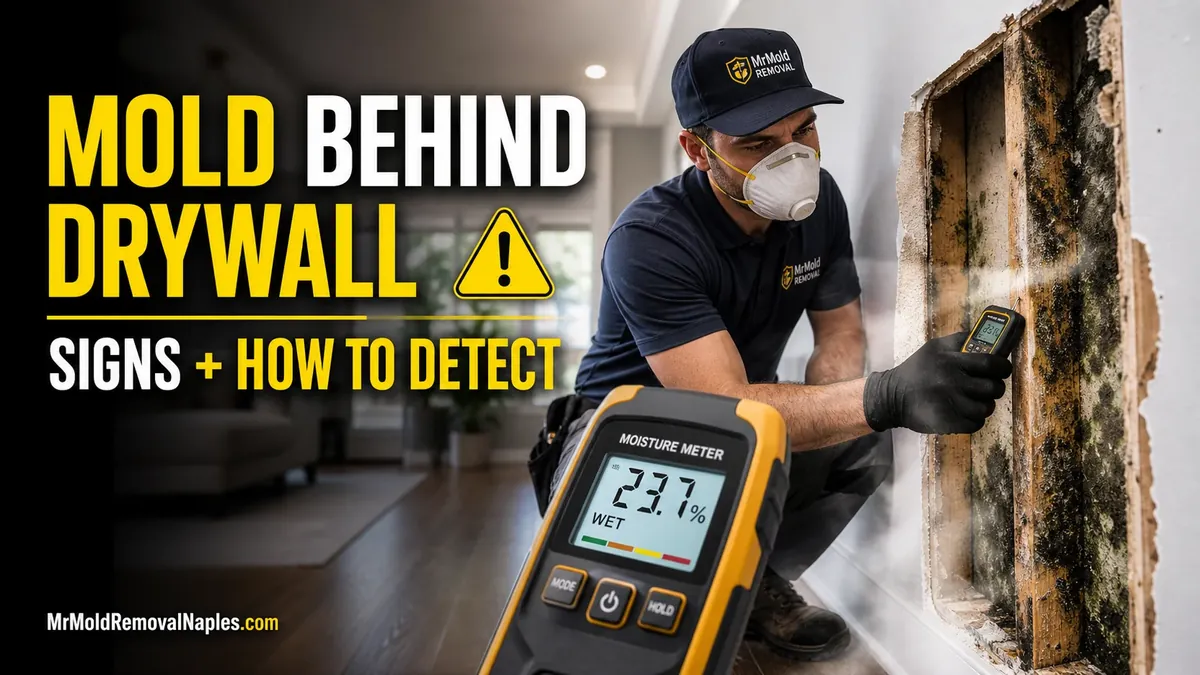
Mold Behind Drywall: Signs, Health Risks, Removal and When to Call a Pro
You walk into the bedroom and catch a faint, sweet, musty smell. No wet spot on the ceiling. No drip under the sink. But the smell stays - and somewhere behind that drywall, something is growing.
Yes, mold behind drywall needs action. But no, you do not need to panic. Mold behind drywall means moisture is somewhere it should not be, and that moisture needs a fix. If the affected area is small and the leak is already repaired, careful DIY removal is sometimes enough. For larger areas or vulnerable family members, call a licensed mold remediator.
Here is everything Naples and Collier County homeowners need to know - signs, health risks, the full removal workflow, realistic costs, and the honest DIY-vs-pro decision.
Should You Worry About Mold Behind Drywall? Yes - But Not Because It Is Always "Toxic"
Most mold behind drywall is a moisture problem first and a health problem second. You have probably heard the phrase "toxic black mold." That refers to Stachybotrys chartarum, a greenish-black mold that grows on wet cellulose materials like drywall. It is real, but it is only one of many mold species that can grow inside walls.
The real danger is not a single species. It is that hidden mold keeps growing until someone finds the water source. In Naples' humid subtropical climate - average relative humidity around 78% - moisture problems compound fast. A small leak after a June storm can become a significant wall cavity problem by August.
The fix is always the same: find the moisture, fix it, remove the affected drywall, dry the cavity, and replace it. Everything else follows from that logic.
7 Warning Signs of Mold Behind Drywall
You do not always need to see mold to know it is there. Watch for these:
- Musty odor with no visible source - earthy or sweet smell that comes and goes
- Bubbling or peeling paint - moisture is pushing from behind the wall surface
- Warped baseboards or wavy drywall seams - the paper facing is absorbing moisture
- Soft or spongy spots when you press on the wall
- Dark specks or streaking around outlets, light switches, or baseboards
- A past or current leak - even one that seemed to "dry out on its own"
- Allergy symptoms only at home - sneezing, coughing, or congestion that clears when you leave
How to Confirm It Without Ripping Out the Whole Wall
You do not have to tear out a large section to check. Cut a small 2-3 inch inspection hole with a drywall saw, shine a flashlight in, and use your phone camera to look around inside the cavity.
A moisture meter lets you scan the wall surface to find damp zones before you cut anything. Thermal imaging cameras detect temperature differences that suggest hidden moisture. Neither tool confirms mold on its own, but both help you target where to look.
Mold Behind Drywall Can Make You Sick - Here Is Who Is Most at Risk
Healthy adults often get only mild symptoms. The real concern is for sensitive groups. If anyone in your Naples home falls into these categories, take wall mold more seriously and consider professional help.
Common Symptoms
- Recurring cough or sore throat
- Sinus congestion and runny nose
- Sneezing and eye irritation
- Asthma flare-ups without another clear trigger
High-Risk Groups
- Babies and young children
- Elderly adults
- People with asthma or mold allergies
- Immunocompromised individuals
- Anyone undergoing cancer treatment
When to See a Doctor
See a doctor if respiratory symptoms persist and improve when you leave the house. That pattern - better outside, worse at home - is a meaningful clue. The EPA is clear: removing the mold and fixing the moisture source is what reduces ongoing exposure.
DIY vs. Professional: Use This Decision Rule
DIY if the mold is small, the leak is fixed, and no one at home is high-risk. Call a pro if the mold is extensive, hidden in the HVAC system, or involves contaminated insulation.
| Situation | DIY Route | Professional Route |
|---|---|---|
| Small patch, leak already fixed, no health issues | Remove and replace drywall after fixing the source | Not required |
| Musty smell, no visible mold | Moisture meter + small inspection hole | Full moisture mapping and air sampling |
| Large area, contaminated insulation, or HVAC involved | Avoid - risk of spreading spores | Licensed remediation with containment |
| Children, asthmatics, or immunocompromised in the home | Strongly reconsider | Containment plus post-remediation clearance testing |
| Renter, not property owner | Not your repair to DIY | Landlord's obligation - contact local health department if ignored |
Mold spreads within 72 hours when moisture is present. Do not wait to make this decision.
The 7-Step Removal Workflow Most Guides Skip
Most pages tell you to "remove the drywall and clean the framing." That is not enough. Here is the full workflow:
- Fix the moisture source first. If water is still coming in, no cleanup will last. Find the leak - roof, plumbing, window seal, or foundation - and fix it before touching the wall.
- Protect yourself and the room. Wear an N-95 respirator, rubber gloves, and goggles. Seal doorways with plastic sheeting so spores do not spread to the rest of the house.
- Cut out all affected drywall. Remove at least 1-2 feet beyond any visible staining to catch hidden growth. Drywall that is soft, stained, or contaminated must go. Do not try to dry it in place.
- Inspect the wall cavity. Look at wood studs, insulation, and electrical boxes. If you see mold on insulation, bag it and remove it - do not try to clean saturated insulation.
- Scrub and treat the framing. Clean wood studs with detergent and water, then let them dry completely. Do not close the wall while anything inside is still damp.
- Dry the cavity thoroughly. Run dehumidifiers and fans for 24-48 hours before closing the wall. This step is where most DIY jobs fall short.
- Replace with moisture-resistant drywall. In a Naples bathroom, exterior wall, or any area prone to humidity, use moisture-resistant board to reduce the chance of recurrence.
For anything beyond a contained DIY patch, professional mold removal and remediation uses containment barriers, negative air pressure, and HEPA scrubbers rated at 99.97% efficiency for particles 0.3 microns and larger - a standard DIY cleanup cannot match that level of spore control.
Mold Behind Drywall Cost: What You Will Actually Pay
Costs vary widely based on the size of the affected area, whether plumbing or roofing repair is also needed, and whether HVAC ducts are involved.
- Small bathroom: $800-$1,500
- Bedroom ceiling or roof leak: $1,500-$2,500
- Kitchen cabinets and drywall: $2,000-$3,500
- Whole home or attic: $4,000-$8,000+
- Structural mold damage: up to $12,000+
- HVAC and air duct mold: $350-$1,500
- Most residential jobs: $1,500-$5,000
A professional mold inspection and testing typically costs $300-$1,000 (average around $600), with lab testing running $75-$100 per sample. Getting an inspection before remediation gives you a clear scope of work and protects you from unnecessary upselling.
See our full breakdown at mold remediation cost in Naples for more detail on what drives pricing locally.
Frequently Asked Questions
Yes, but calmly. It signals moisture is present and needs to be fixed. The longer it sits, the more the drywall, framing, and indoor air quality are affected. Small patches caught early are manageable. Large or long-standing problems need professional attention.
It can, especially if you are allergic, asthmatic, or immunocompromised. Common symptoms include coughing, sneezing, sinus congestion, and eye irritation. If your symptoms improve when you leave the house and return when you come home, that pattern warrants both a doctor visit and a mold inspection.
Look for musty odor, bubbling or peeling paint, soft drywall, and warped baseboards. A moisture meter can locate damp zones. Cutting a small 2-3 inch inspection hole lets you look inside the cavity without removing a full section of wall.
No. Bleach is not effective on porous materials like drywall because it cannot penetrate deep enough to reach the root structure of mold growth. If drywall is contaminated, it must be physically removed and replaced - not treated in place.
Mold can begin growing within 24-48 hours when moisture and warmth are present. That is why drying wet materials quickly is so critical. In Naples' warm, humid climate, a water intrusion left over a weekend can already have active mold growth by Monday.
It depends on the cause. Sudden accidental water damage - a burst pipe or storm damage - may be covered if your policy includes mold. Gradual leaks from long-term neglect are typically excluded. Always check your policy and document the damage before any cleanup begins.