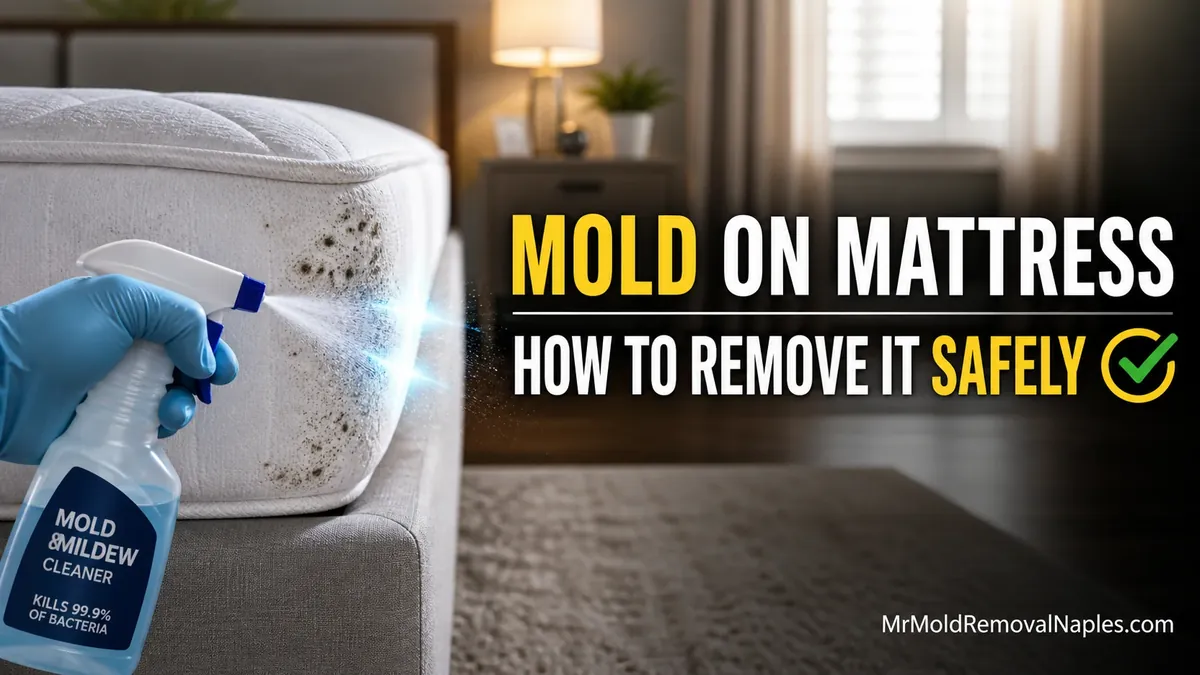
How to Remove Mold from a Mattress (And When to Just Replace It)
It's Friday night. You flip your mattress and stop cold. Dark black spots are creeping around the underside, and the faint musty smell suddenly makes sense. Your first instinct is bleach. But before you spray anything, here is what actually works, what doesn't, and the one question that matters more than any cleaner: Is this mattress worth saving?
If you're in Naples or anywhere in Collier County, Florida, you already know the air is no joke. With an average relative humidity around 78% and hurricane season running June through November, mold doesn't need much of an invitation. A mattress sitting on a solid base with no airflow is practically a petri dish.
This guide gives you a step-by-step cleaning method, a clean-vs-replace decision rule, and honest answers about when DIY isn't enough.
Quick Verdict: Can a Moldy Mattress Be Saved?
Yes - if the mold is only on the surface, the mattress is not heavily contaminated, and you can dry it completely.
No - if the mold has penetrated deep into foam, if it has returned after a previous cleaning, or if anyone in your home has asthma, allergies, or a weakened immune system. In those cases, replace it.
| Method | Best For | Watch Out For |
|---|---|---|
| HEPA vacuum | Removing loose surface mold before wet cleaning | Does not kill mold |
| White vinegar | Light surface mold on innerspring or latex | Smell; can soak into foam |
| 3% hydrogen peroxide | Stains and surface mold on lighter fabrics | Can discolor some fabrics |
| 70%+ rubbing alcohol | Evaporates fast; good for nonporous surfaces | Flammable; strong fumes |
| Baking soda paste | Deodorizing after cleaning | Not a primary mold killer |
| Replacement | Deep or foam mold; health sensitivity | Cost |
Can a Mattress with Mold Be Saved? Yes, If the Mold Is Surface-Only.
The EPA puts it plainly: the key to mold control is moisture control. Cleaning a mattress without fixing the moisture problem is temporary at best.
Surface mold - shallow spots on the fabric or ticking - can often be cleaned with the right method and thorough drying. Deep mold that has soaked into the layers of foam is a different story.
It is worth trying to save the mattress if:
- The mold spots are small and on the surface only
- The mattress is innerspring or latex (less porous)
- You can get the mattress completely dry within 24 hours
- No one in the home has asthma, mold allergies, or an immune condition
Replace the mattress if:
- Mold has returned after a previous cleaning attempt
- The mattress is memory foam and mold is visible anywhere on it
- The mattress has been wet or damp for an extended period
- The smell is deeply musty even after drying
- A child, elderly person, or immunocompromised person sleeps on it
If you are unsure how far the mold has spread, a professional mold inspection in Naples can identify the contamination level before you invest time or money cleaning.
What Kills Mold on a Mattress? Vinegar, Hydrogen Peroxide, and Rubbing Alcohol - But None Work If the Mattress Stays Wet.
There is no EPA-approved DIY protocol for mattress mold. The methods below are widely used DIY consensus. They can work on surface mold, but they are not substitutes for professional remediation.
White vinegar (undiluted) - Acidic enough to kill many surface mold species. Apply with a spray bottle, let it dwell for 10-15 minutes, then blot. The smell fades as it dries. Downside: liquid soaks into foam and can feed more mold if not dried completely.
3% hydrogen peroxide - Works on surface mold and mold stains. Apply, wait 10-15 minutes, blot dry. Downside: can lighten or discolor some fabric colors. Test a hidden corner first.
70% or higher rubbing alcohol - Evaporates quickly, which reduces the "adding moisture" risk. Good for firmer surfaces. Downside: flammable; use with windows open and no open flames.
Baking soda - Excellent deodorizer, mild antifungal. Best used after cleaning, not as a primary treatment. Sprinkle on, leave for several hours, vacuum thoroughly.
Do not mix vinegar and hydrogen peroxide. Do not use bleach on a mattress. Bleach can leave excess moisture in porous material - which is the exact condition mold needs to grow.
How to Remove Mold from a Mattress: Step-by-Step
Work through this process in order. Skipping the drying step is the most common reason mold returns.
- Protect yourself first. Wear rubber gloves, an N95 or P100 respirator mask, and safety glasses. Open every window in the room.
- Move the mattress outside if possible. Sunlight is a natural mold inhibitor and speeds drying. Naples homeowners have the advantage here - use it.
- Vacuum loose mold spores. Use a HEPA vacuum (filters particles down to 0.3 microns) to remove loose surface mold. Do not use a standard vacuum - it will spread spores into the air.
- Apply your chosen cleaner to the affected area. Spray or dab - do not saturate. The goal is surface contact, not soaking.
- Let it sit for 10-15 minutes. This is the dwell time needed for the solution to work.
- Scrub gently with a soft-bristle brush. Work in small circles. Do not scrub so hard you push liquid deeper into the material.
- Blot - do not rub - with a clean dry cloth. Absorb as much moisture as possible.
- Dry completely. Use fans, a dehumidifier, and direct sunlight. Do not put the mattress back on the bed until it is fully dry. This can take 6-24 hours depending on the material and humidity.
- Repeat if mold stains remain. One round may not be enough for older stains.
- Fix the moisture source before the mattress goes back. Clean the bed frame, check for leaks, and improve airflow in the room.
How to Remove Mold from the Bottom of a Mattress
The bottom of the mattress is almost always the worst-affected area. It sits against a surface with little to no airflow, and moisture collects there first. Here is a dedicated workflow for the underside.
Step 1: Flip the mattress and lean it against a wall so you can inspect and work on the full bottom surface.
Step 2: Before cleaning the mattress, clean the box spring, slats, or bed base. Mold on the mattress bottom usually means mold on the frame below it too. Use the same cleaning process on wooden slats. Replace any slats that are warped, blackened, or soft.
Step 3: Apply your chosen cleaner to the bottom of the mattress using the step-by-step process above. The underside fabric is often thicker - allow extra dwell time.
Step 4: Dry the underside completely before laying the mattress back down. Prop it up so air can circulate underneath.
Step 5: Add a waterproof mattress encasement before putting the mattress back. This creates a barrier against future moisture and makes the underside easier to wipe down.
If the bed sits on a solid platform with no slat spacing, consider switching to a slatted frame with at least 2-3 inches of spacing. In Collier County's humidity, solid bases trap moisture almost every time.
Does Mold on a Memory Foam Mattress Mean Replacement? Generally, Yes.
Memory foam is highly porous. Liquid - including cleaning solutions - soaks in quickly and may not dry completely. If you can see mold on the surface of memory foam, spores are very likely already inside the material where you cannot reach them.
Applying vinegar or hydrogen peroxide to memory foam can temporarily suppress surface mold while leaving moisture trapped inside, creating ideal conditions for the mold to regrow deeper in the mattress.
The honest answer: if a memory foam mattress has visible mold and is out of warranty, replacement is almost always the safer call. The same applies to thick pillow-top mattresses where the top layers cannot be fully dried.
For a broader look at how mold behaves in porous materials throughout your home, see our page on mold removal and remediation in Naples.
What Are the First Signs of Mold Sickness?
"Mold sickness" is not a standard medical diagnosis. The correct clinical term is mold allergy, and the symptoms are well-documented by the Mayo Clinic.
Mold allergy symptoms include:
- Sneezing and runny nose
- Nasal congestion
- Red, itchy, or watery eyes
- Coughing
- Skin rash or irritation
- Worsening asthma symptoms
A key clue: symptoms that are worse at home and better away from home suggest the home environment (including the mattress) may be a trigger. The WHO has established that dampness and mold in buildings are associated with respiratory symptoms and asthma.
If you or a family member experience these symptoms regularly and a moldy mattress is present, do not wait to address it. This is especially true for children, elderly adults, and anyone with a compromised immune system.
If mold has spread beyond the mattress and into the room, a professional mold inspection and testing is the right next step.
How to Get the Musty Smell Out of a Mattress
After mold cleaning, a musty odor often lingers even after the visible mold is gone. Baking soda is the most effective DIY deodorizer for mattresses.
How to use baking soda on a mattress:
- Sprinkle a generous, even layer across the entire mattress surface
- Leave it for at least 4-8 hours (overnight is better)
- Vacuum it up thoroughly with a HEPA vacuum
- Repeat on the other side
Direct sunlight also breaks down odor-causing compounds. If you can prop the mattress in a sunny spot outdoors, even 2-3 hours makes a significant difference. In Naples, an afternoon in the sun can do what a deodorizer spray never will.
Do not skip the drying step and then apply baking soda. Baking soda on a damp mattress traps moisture rather than absorbing odor.
How to Prevent Mold on a Mattress
Cleaning a mattress is harder than preventing mold in the first place. In Florida's humid subtropical climate, prevention is an ongoing habit, not a one-time fix.
Prevention checklist:
- Keep bedroom humidity below 50-60%. Use a dehumidifier year-round in Collier County, especially during hurricane season.
- Use a waterproof mattress encasement. This is the single most effective barrier against moisture reaching the mattress itself.
- Make sure the bed frame allows airflow. Slatted frames with adequate spacing prevent moisture from collecting underneath.
- Air out the mattress weekly. Pull back all bedding for at least 30 minutes every morning when possible.
- Rotate or flip the mattress every 3-6 months and inspect the underside each time.
- Fix leaks and condensation immediately. A single roof leak or AC condensation drip can create a mold problem within 72 hours.
Snowbird season brings another consideration for Naples homeowners: closing up a property for summer in Florida's heat and humidity creates perfect mold conditions. Run the AC at 78-80°F minimum and keep a dehumidifier running if the home will be unoccupied for extended periods.
When to Call a Professional - Or Just Buy a New Mattress
Professional mattress cleaning can remove surface mold, but it cannot guarantee that mold deep inside a porous mattress is gone. That is an honest limitation of the service, and reputable cleaners will tell you the same.
The EPA recommends considering professional help for large mold growth - generally cited as more than 10 square feet. For a mattress, if mold covers a large portion of the surface or has returned after prior cleaning, professional remediation of the room and replacement of the mattress is the realistic path forward.
Call a professional mold remediation company when:
- Mold has spread beyond the mattress to walls, flooring, or HVAC
- The mattress was a secondary discovery - you suspect mold is elsewhere in the home
- A household member has developed respiratory symptoms
- You cannot identify or fix the moisture source
If mold has reached your air ducts or HVAC system, see our guide to HVAC and air duct mold in Naples. Mold in the HVAC system distributes spores to every room in the home, including over a freshly cleaned mattress.
For widespread contamination, our emergency mold removal service is available for situations that cannot wait.
It Depends: The Three Factors That Actually Decide
Every mattress mold situation is different. The final verdict comes down to three things:
- Depth of contamination - Surface mold can be cleaned. Mold inside the material layers cannot reliably be removed.
- Mattress material - Innerspring and latex are more forgiving. Memory foam and thick pillow-top almost always mean replacement.
- Health vulnerability in the home - Asthma, mold allergy, children, elderly adults, or a compromised immune system shifts the verdict toward replacement even for smaller contamination.
Cost and effort are secondary to these three. A DIY cleaning that costs nothing is not a win if the mold returns in three weeks or someone in the home keeps waking up congested.
Final Verdict
You can remove surface mold from a mattress with household cleaners, but the real fix is moisture control. If the mattress cannot be fully dried and kept dry, the mold will almost certainly return.
For small, surface-level spots on a non-foam mattress with no health vulnerabilities present, the DIY clean is worth attempting. For memory foam, recurring mold, or any situation involving respiratory health, replacement is the safer and more honest solution.
If you suspect mold has spread beyond the mattress to walls, flooring, or your HVAC system, contact Mr. Mold Removal Naples. Our team handles mold remediation throughout Naples and Collier County using IICRC S520 protocols: containment, negative air pressure, HEPA scrubbers, and clearance testing.
Frequently Asked Questions
Yes, if the mold is surface-only, the mattress is not memory foam, and you can dry it completely within 24 hours. No, if the mold is deep, widespread, has returned before, or if anyone in the home has asthma or mold allergies. When in doubt, replace it.
White vinegar, 3% hydrogen peroxide, and 70% rubbing alcohol are the most commonly used DIY options for surface mold. Baking soda deodorizes after cleaning but is not a primary mold killer. None of these methods work if the mattress remains damp. This is DIY consensus, not an EPA or CDC protocol.
"Mold sickness" is not a clinical diagnosis. The medical term is mold allergy. Symptoms documented by the Mayo Clinic include sneezing, congestion, runny nose, red or itchy eyes, coughing, and skin rash. If symptoms are consistently worse at home and improve when you leave, your mattress or bedroom environment may be the trigger. Seek medical advice if symptoms persist.
Flip the mattress and lean it upright. Clean the bed frame or box spring first - mold on the bottom of a mattress almost always means mold on the base below it. Apply the same step-by-step cleaning process to the underside, dry it completely before replacing it, and add a waterproof mattress encasement before putting it back.
Generally not recommended for porous materials. Bleach does not penetrate foam effectively, and it leaves behind moisture that can worsen the mold problem. It can also damage fabric and create harmful fumes when mixed with other cleaners. Stick to vinegar, hydrogen peroxide, or rubbing alcohol for mattress mold.
In most cases, yes. Memory foam is highly porous. Liquid cleaners soak into the material and may not dry completely, creating conditions for mold to grow deeper inside the foam. If mold is visible on the surface of a memory foam mattress, it is likely already inside the material. Replacement is the safer choice. If you are unsure, schedule a professional mold inspection before making a decision.